Typewriter models•Model guide
The Olivetti Studio
The Lettera’s big sister. Wider, heavier, more comfortable: the machine you set up on a desk and never put away.
A desktop semi-portable
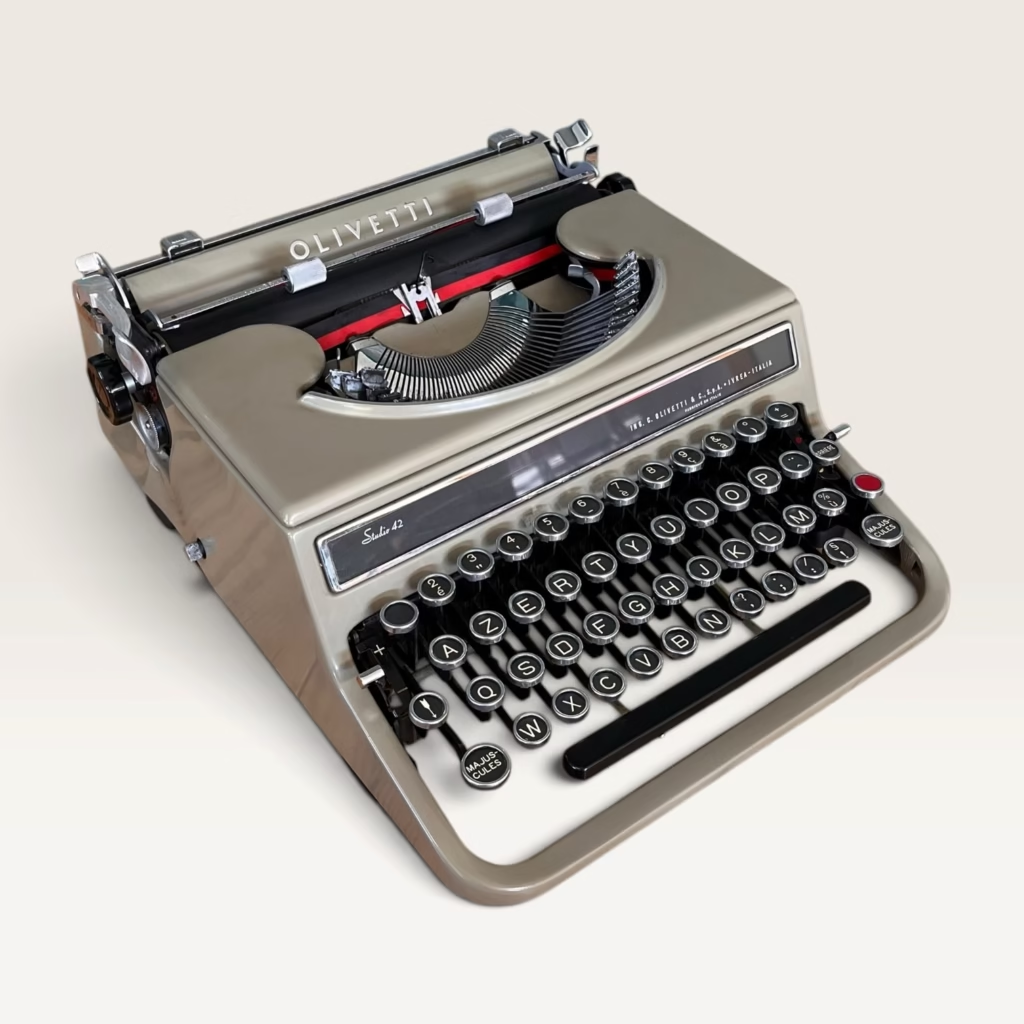
Olivetti manufactures in Ivrea, in Piedmont. Alongside the Letteras, made to be carried, the company produced the Studio range: wider, heavier machines with a full-size carriage and a mechanism built for daily use. They are called semi-portables because they have a handle and a lid, but they are designed to stay put.
The Studio 42, released in 1935, owes its silhouette to Xanti Schawinsky, who was then working with the architects Luigi Figini and Gino Pollini. The Studio 44, which succeeded it in 1952, was designed by Marcello Nizzoli, who also gave us the Lexikon 80. Later versions, including the Studio 46, carried the range into the 1970s with more modern bodywork.
What it feels like to type on
It is a world away from a travel portable. The strike is deeper and more cushioned, the carriage wider, and the whole machine stays put on the table. On a long text, you feel the difference in your wrists.
The tab stop and the double line spacing are where you expect them. It is a working machine, not a display piece, and it shows from the first lines.
Which Studio to choose?
The 42 is the collector’s piece: pre-war silhouette, design value, and a typing action nearly ninety years old. The 44 is the best compromise for really writing, with a proven mechanism. Later models, like the 46, are often lighter in use and easier to find.
As always, the keyboard makes the difference. Depending on the market it was made for, a Studio may be AZERTY, QWERTY or QWERTZ. We state it on every listing.
What we check at the workshop
- Body dismantled and the segment fully cleaned, where the typebars bind.
- Axles degreased and relubricated, strike and line spacing adjusted.
- Carriage check: travel, return, end-of-line ratchet.
- Condition of the rubber platen, often hardened with age.
- New ribbon fitted, then a full page typed, letter by letter.
The right ribbon
Every machine leaves with a new ribbon fitted. The day it needs changing, we sell the ribbons that suit this model: not all spools fit.
The questions we get about the Olivetti Studio
How much does a restored Olivetti Studio cost?
The price depends on the series, the colour and the rarity of the example, never on the quality of the overhaul: they all go through the same workshop. The machines available right now, with their exact price, are just below.
Does the Olivetti Studio come in AZERTY?
Yes. Like almost all machines of that period, the Olivetti Studio was made for several markets: AZERTY for France and Belgium, QWERTY for English- and Spanish-speaking countries, QWERTZ for Germany and Switzerland. The layout is mechanical, engraved in the typebars: it can’t be changed afterwards. The keyboard is therefore stated in the title of each machine and on its listing.
Is it ready to type on delivery?
Yes. Every Olivetti Studio is taken apart, its segment cleaned typebar by typebar, its axles degreased and relubricated, its strike and line spacing adjusted. A new ribbon is fitted, then we type a whole page before dispatch. It arrives ready to write, with nothing to buy.
Which ribbon for an Olivetti Studio?
The ribbon is the only consumable, and it is changed once or twice a year depending on how much you write. Not all spools fit: we sell those that suit the Olivetti Studio, and each machine’s listing gives the right reference.
Our Olivetti Studio typewriters available now
3 exemplaires actuellement restaurés et prêts à écrire. Chacun est une pièce unique.