
Restoration service
My typewriter won't type
Stuck keys, pale typing, a carriage that won't move. A mechanical typewriter doesn't break down like an electronic device: it gets clogged, it goes out of adjustment, and it starts working again. Describe yours to me and I'll tell you what's wrong with it.
- Diagnosis from your photos
- Precise quote, work only after your approval
- Returned by secure parcel, delivery included
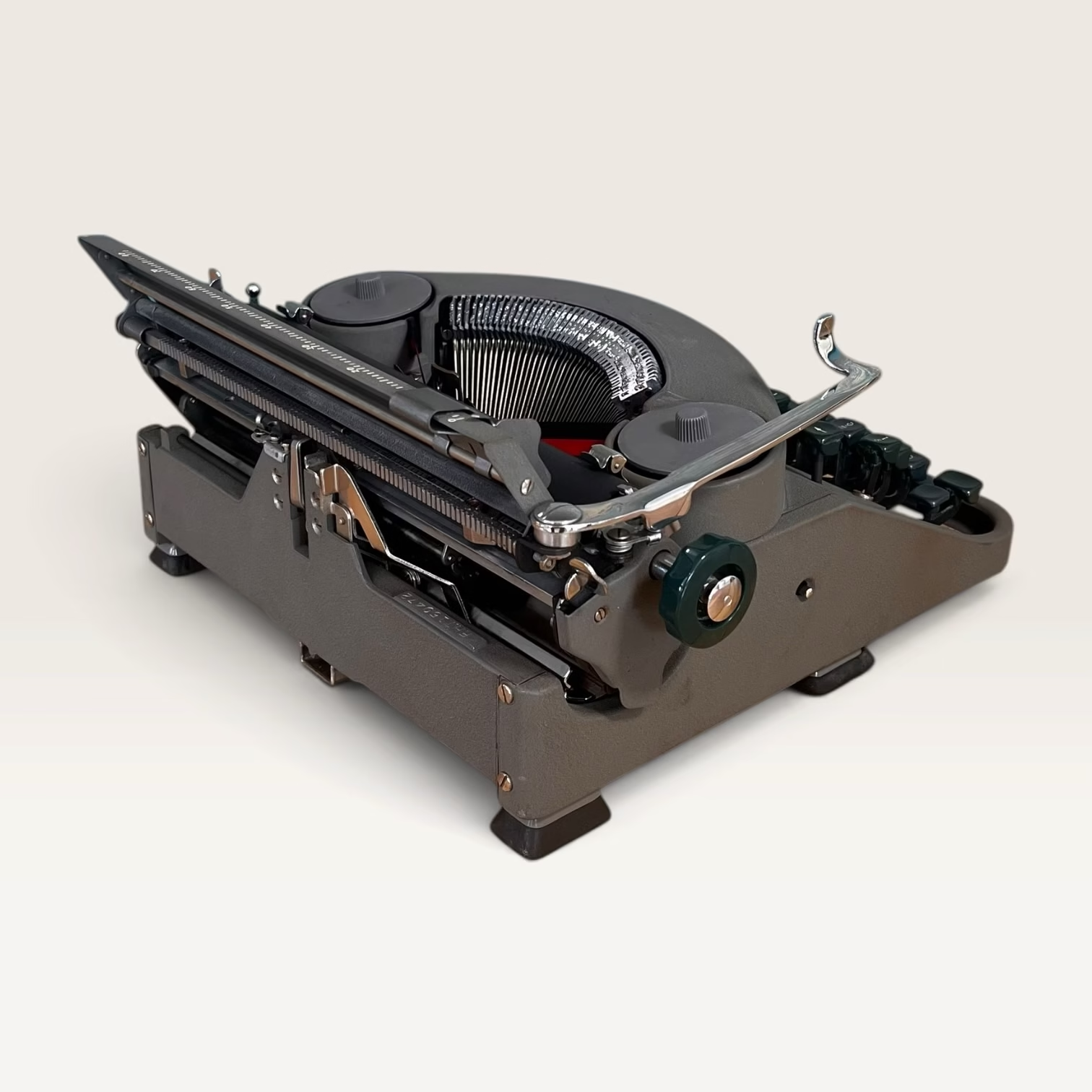
No battery, no circuit board: what stops a typewriter is mechanical, and what is mechanical can be repaired.
The diagnosis
Twelve typewriter faults, and what they mean
First of all, you need to name precisely what the machine is doing. Find the line that looks most like yours: it will tell you whether it is a simple adjustment, or whether the problem has to be dealt with on the bench.
The typing is pale, grey, almost faded
The ribbon is dry or has reached the end of its life. This is the only case where nothing is wrong with the mechanism: an ink ribbon is a consumable, and eventually it stops depositing anything, even on a machine in perfect condition.
Try at homeThe typebars rise but nothing prints
The ribbon no longer sits in front of the paper: it has come out of its guides, it has twisted between the spools, or the ribbon holder that lifts at each keystroke stays down. Start by looking at the colour selector: one of its positions is meant for typing without a ribbon.
Try at homeThe keys stay stuck in the air
Old oil, thickened and mixed with dust, has seized the segment — the fan-shaped part on which all the typebars pivot. The typebars go up and no longer come down. This is the state in which almost every machine that has sat for years in an attic arrives. The segment is taken apart and cleaned with solvent, typebar by typebar.
Workshop jobThe keys are stiff, you have to force them to write
Same origin, at a more discreet stage: the mechanism is held back over its whole travel, and the return springs are no longer enough to bring the typebars back. A well-degreased machine recovers a light touch, without a single part needing to be replaced.
Workshop jobThe carriage doesn't move at all
Most often it is simply locked: most portables have a transport lock that immobilises the carriage in the case. Look for the lever, on the front or under the carriage. If it is properly released and nothing moves, the escapement is seized, and then the machine has to be opened up.
Try at homeThe carriage doesn't advance one step with each letter
The escapement, the mechanism that releases exactly one step per keystroke, is clogged or out of adjustment. The drawstring that pulls the carriage may also have slackened, come off or broken: it is a wear part that can be replaced.
Workshop jobThe carriage races all the way by itself
The opposite of the previous one: the escapement no longer holds anything back and the carriage shoots to the end stop from the very first letter. Clogging first, wear of the part next. Above all, don't hold the carriage back by hand while typing: it's the best way to bend something.
Workshop jobThe line return doesn't advance the paper
The carriage does return to the left, but the line is typed over the previous one. The line-spacing pawl, which turns the platen by one notch, no longer engages. First check the small selector near the platen; after that, it is an adjustment.
Workshop jobLetters are crooked or overlap
The typebars have developed play or been slightly bent, often after a knock or transport without padding. Capitals that strike too high or too low come from the same adjustment. Alignment is redone typebar by typebar, with dedicated tools: it is precision work.
Workshop jobThe machine skips letters or doubles spaces
The typebars don't return fast enough and collide, or the escapement lets two steps through. Typing and carriage advance are one and the same movement: when one slows down, the other goes out of adjustment. A full cleaning solves most of it, the rest is down to adjustment.
Workshop jobThe paper slips, doesn't feed straight or no longer catches
The platen has hardened over the years, the feed rollers have lost their grip, or the pressure levers no longer clamp. This is rubber wear, not a breakage: it is compensated for by adjustment, and replaced when necessary.
Workshop jobThe machine comes from a cellar: rust, mould, everything seized
Damp and old grease have worked together. It looks dramatic, but it is rarely a lost cause: the metal is treated, the mechanism degreased, the body cleaned. What really condemns a machine is rarer: a bent frame, or a machine that has already been taken apart and is incomplete.
Workshop job
The simplest way
Do two lines sound like yours? Send me three photos
An overall view, a view of the mechanism, and the problem area. I look, I reply to you personally, and I give you a price range before the machine leaves your home.
On the bench
What a restoration includes
A typewriter isn't repaired one part at a time: it is reworked as a whole. That is what makes the difference between a machine that types and a machine that types true.
- Dismantling and cleaning the segment, where dust and congealed oil collect. This is where most seizures come from.
- Complete degreasing of the mechanism, then lubrication of only the points that need it, in measured quantities.
- Replacement of wear parts : carriage drawstring, felts, tired springs, feed rollers.
- Adjustment of alignment and strike, typebar by typebar, until the line is straight and the inking even.
- Cleaning of the type and the platen, new ribbon fitted, and a test page checked before the machine goes back.
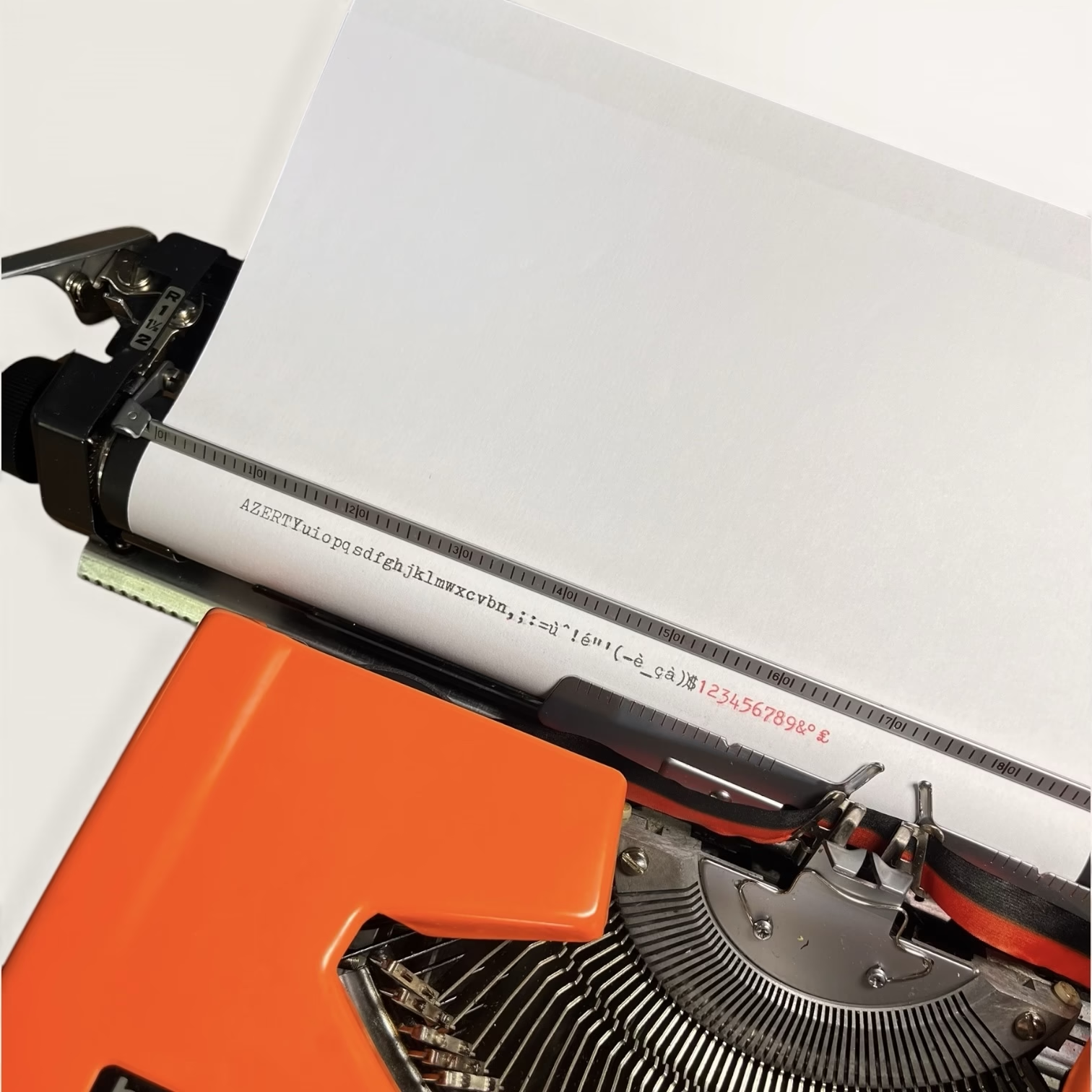
The three actions that make the fault worse
- Oiling the segment. Oil holds dust there and recreates, within a few months, exactly the seizure you wanted to solve.
- Forcing a stuck key or typebar. The linkages bend far more easily than you'd think, and a bent typebar has to be straightened with a tool.
- Spraying a universal penetrating oil. It leaves a greasy film throughout the mechanism, which then has to be removed part by part.
How I work
From your photos to the machine's return
Whether it's a simple service or a full restoration, the procedure is always the same. You know where you're going before the machine leaves your home, and nothing is committed without your approval.
You send me a few photos
An overall view, a view of the mechanism, and the problem area. Add two or three lines on what the machine does, or no longer does. That is often enough to see clearly.
I give you an indicative price range
Based on the photos and your description. It lets you decide with full knowledge, before packing anything.
The machine arrives at the workshop, and I draw up a precise quote
Once the machine is in my hands, I can see exactly what work needs doing and which parts to replace or not. The quote is itemised, and it is firm.
Work begins once the quote is approved
Nothing is committed without your approval. If the quote doesn't suit you, the machine comes back to you as it is.
Returned by post, in a secure parcel
Once payment is received, the machine goes back carefully wedged and packed, like every machine that leaves the workshop.
The price I quote includes delivery. No shipping costs added at checkout: the quote price is the final price.
In the parcel
New ribbons with the machine
When you get your quote, you can add ribbons: they are slipped into the parcel with the machine, at no extra shipping cost. Enough to last a good while before your next order.

The questions people ask me
Before writing to me
My typewriter won't type: can it be repaired?
In the vast majority of cases, yes. A mechanical typewriter is made of solid, accessible parts designed to last half a century. What stops it is almost always clogging, a lost adjustment or a wear part. Truly lost cases are rare: a bent frame, deep corrosion, or a machine that has already been taken apart and is incomplete.
How much does it cost to repair a typewriter?
It depends entirely on the condition. I first give you an indicative range from your photos, then a precise quote once the machine is at the workshop, according to the work and the parts to be replaced or not. Work only starts after your approval, and the price quoted includes delivery.
Do you repair all typewriter brands?
Mechanical portables and semi-portables from the 1930s to the 1980s are my territory: Hermes, Olivetti, Olympia, Brother, Remington, Royal, Underwood, Triumph, Adler, Japy, Facit and the rest. The mechanical principle is the same from one brand to another; it is the wear parts that change. Send me photos and I'll tell you right away whether it's within my reach.
Should you oil a typewriter?
Not the segment, nor the typebars. Oil holds dust there and ends up seizing everything: it is the leading cause of the machines that reach me completely blocked. These parts are cleaned, not lubricated. Only a few precise points, such as the carriage rails, call for light lubrication.
Can you still find spare parts?
The most common wear parts, such as drawstrings, felts or ribbons, are replaced without difficulty. For the rest, a typewriter is repaired much more by restoring the existing part than by swapping it. If a part is genuinely missing and can't be found, I'll tell you before committing to anything.
How do I ship my machine without damaging it?
The carriage must be locked if the machine has a transport lock, and the machine wrapped, then wedged on all sides in a sturdy box. An original case alone does not protect against a knock: it must itself be wedged inside a box. I give you the exact instructions at the diagnosis stage.
Can I add new ribbons to the shipment?
Yes, and it's the right moment to do it. The ribbons you choose are slipped into the parcel with the machine, at no extra shipping cost. See the available ribbons.
My ribbon is new and the typing is still pale: why?
Three leads, in this order. The ribbon has twisted between the spools, and it is its edge that faces the paper instead of its width. The colour selector is on the no-ribbon position. Or the ribbon holder no longer lifts high enough, and only the edge of the ribbon touches the paper. The first two are fixed in a minute; the third is adjusted at the workshop.
Going further
Worth reading next
- The techniqueChanging the ribbonThe ribbon's path, the direction of the spools, the guides not to forget.
- Day to dayMaintaining your machineRoutine cleaning, storage, what keeps you from ending up with a fault.
- The model guidesModel by modelRecognising a machine, its typing, its ribbon, and what suits it.
Matypo workshop
Tell me what's wrong with it
A few photos, two lines on what is sticking, and I'll reply personally with a price range. No obligation, and no jargon.