Typewriter models•Model guide
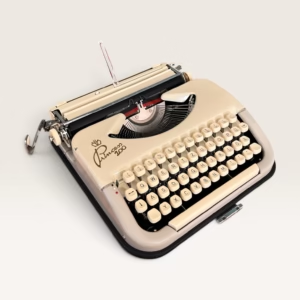
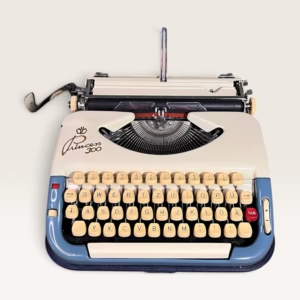
The Princess
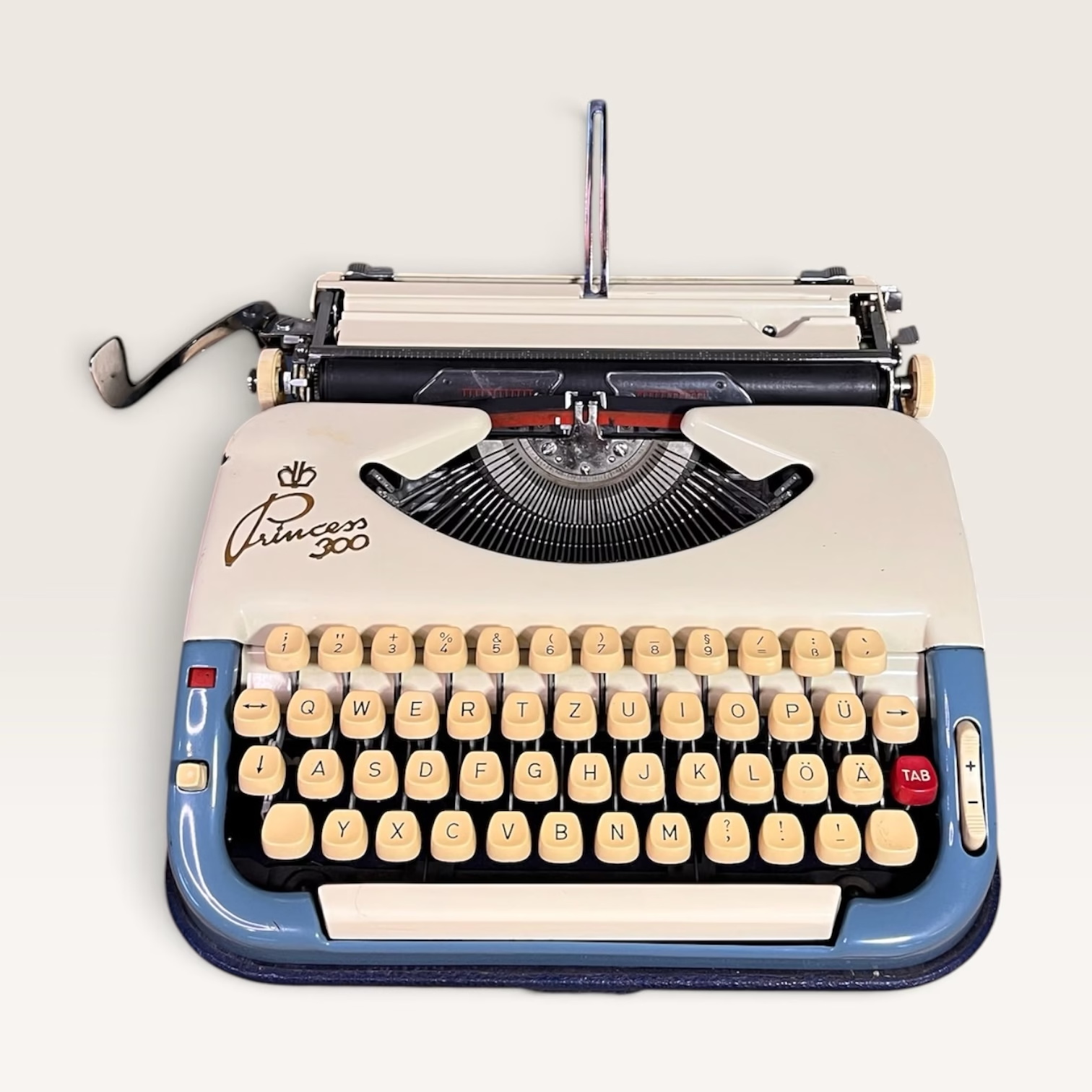
The flat portable from Augsburg. Made from 1948 by Keller & Knappich, the firm that became KUKA, and sold all over Europe, sometimes under the name Scheidegger.
A German from Augsburg
Keller & Knappich had been making acetylene and car headlamps in Augsburg since 1898. After 1945, the factory looked for work to keep going and launched into two unrelated products: circular knitting machines and a portable typewriter, the Princess. Production began in 1948.
The company’s initials, Keller und Knappich Augsburg, form a name known today for something else entirely: KUKA, one of the world’s largest makers of industrial robots. Princess serial numbers pass 400,000 in the mid-1960s, which makes it a widely distributed portable in Europe.
What it feels like to type on
It is a flat one. The cover comes down low, the machine sits on a desk without taking up space, and the strike stays crisp: the mechanism is German, the typebars return cleanly and the carriage doesn’t float.
It is heavier than a Hermes Baby and less nervy than an Olympia SM. It is a machine to leave out on a table rather than a travel companion, and that is precisely what makes it pleasant for writing for a long time.
Which Princess to choose?
The range is numbered: Princess 100, 200, 300, then 400 and 500, with variants sold under the names Exemplar and Madame. The higher the number, the better equipped the machine. The 300s are the ones we see most often.
The name Scheidegger, which you sometimes read on the cover in place of Princess, does not denote another model. It is a distributor’s brand: the mechanism underneath is the same Keller & Knappich. As always, the keyboard makes the difference, and it is stated in the title of each machine.
What we check at the workshop
- Body dismantled and the segment fully cleaned, where the typebars bind.
- Axles degreased and relubricated, strike and line spacing adjusted.
- Carriage check: travel, return, end-of-line ratchet.
- Condition of the rubber platen, often hardened with age.
- New ribbon fitted, then a full page typed, letter by letter.
The right ribbon
Every machine leaves with a new ribbon fitted. The day it needs changing, we sell the ribbons that suit this model: not all spools fit.
The questions we get about the Princess
How much does a restored Princess cost?
The price depends on the series, the colour and the rarity of the example, never on the quality of the overhaul: they all go through the same workshop. The machines available right now, with their exact price, are just below.
Does the Princess come in AZERTY?
Yes. Like almost all machines of that period, the Princess was made for several markets: AZERTY for France and Belgium, QWERTY for English- and Spanish-speaking countries, QWERTZ for Germany and Switzerland. The layout is mechanical, engraved in the typebars: it can’t be changed afterwards. The keyboard is therefore stated in the title of each machine and on its listing.
Is it ready to type on delivery?
Yes. Every Princess is taken apart, its segment cleaned typebar by typebar, its axles degreased and relubricated, its strike and line spacing adjusted. A new ribbon is fitted, then we type a whole page before dispatch. It arrives ready to write, with nothing to buy.
Which ribbon for a Princess?
The ribbon is the only consumable, and it is changed once or twice a year depending on how much you write. Not all spools fit: we sell those that suit the Princess, and each machine’s listing gives the right reference.
Our Princess typewriters available now
2 exemplaires actuellement restaurés et prêts à écrire. Chacun est une pièce unique.