Typewriter models•Model guide
The Brother 210
The Japanese portable of the 1970s, often brightly coloured. Compact, tough, and much easier to live with than it looks.
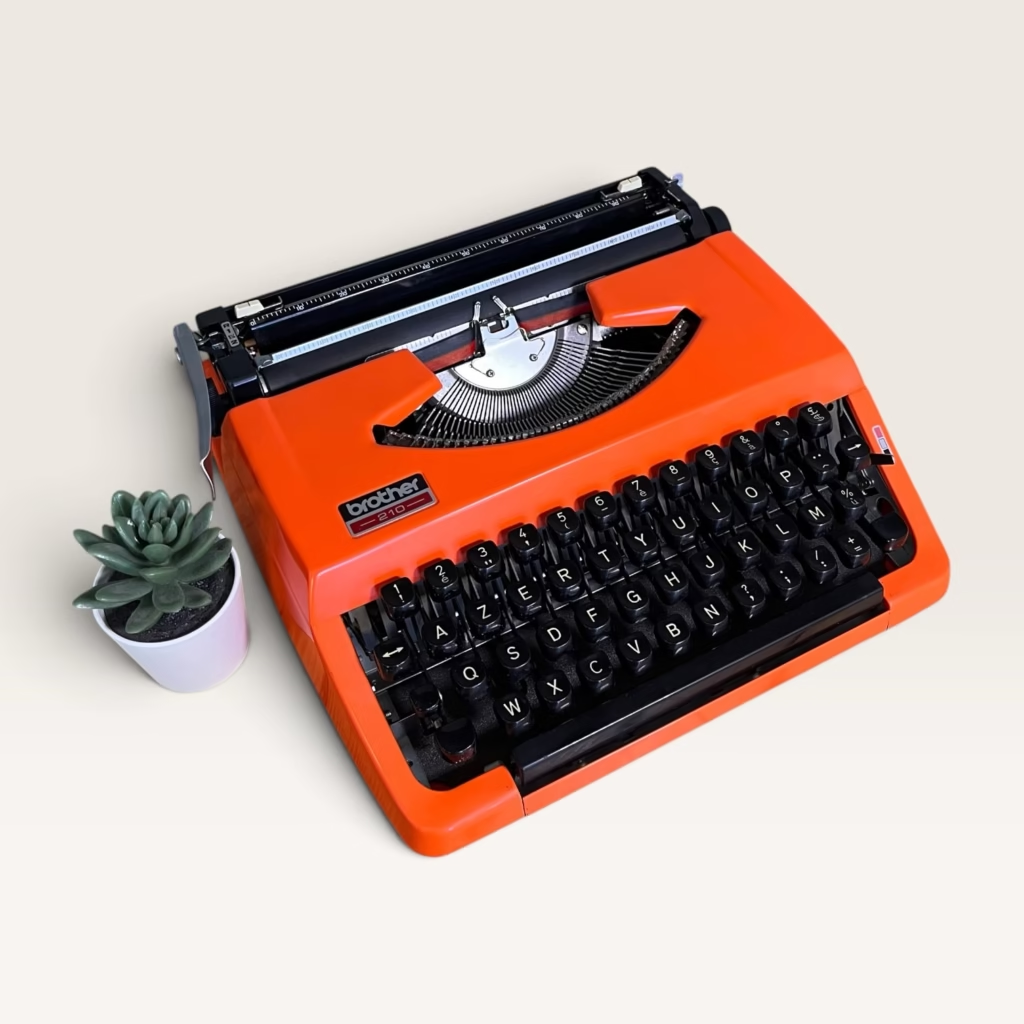
A Japanese machine built to last
Brother was born in Nagoya, Japan, in sewing machines. The company took up portable typewriters after the war and exported them by the hundreds of thousands in the 1960s and 1970s. The 210 belongs to that generation: a compact format, a moulded body, and a mechanism designed for mass production without giving up any sturdiness.
These Japanese portables travelled a lot under other names. Large American and European retailers resold them under their own brand, with the same mechanism underneath. That is why you come across identical machines badged differently today, and why the 210 remains easy to find, and therefore affordable.
What it feels like to type on
The strike is crisp and the key return clean. It is not a hushed machine like a large European portable of the 1950s: it is more direct, a little louder, and that is exactly what people want who like to hear that they are writing.
The format counts for a lot. It sits on the corner of a table, closes up, and stores away. For a beginner, or a teenager, it’s the kind of machine you’re not afraid to take out every day.
Which Brother 210 to choose?
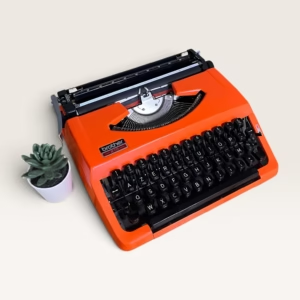
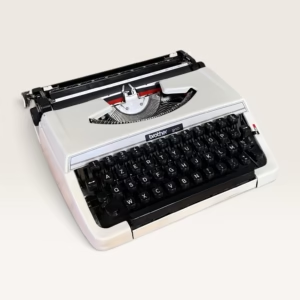
Colour is the first criterion, and it’s what makes these machines endearing: orange, white, blue, green depending on the series. These are period shades, not repaints.
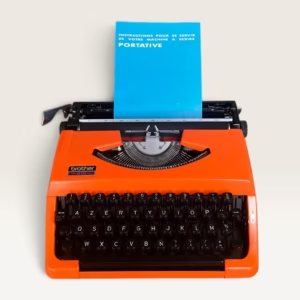
The second criterion, decisive in France, is the keyboard. Depending on the destination market, the same 210 may be AZERTY, QWERTY or QWERTZ. The layout is mechanical and can’t be changed. We state it on every listing, and a filter lets you show only the AZERTY ones.
What we check at the workshop
- Body dismantled and the segment fully cleaned, where the typebars bind.
- Axles degreased and relubricated, strike and line spacing adjusted.
- Carriage check: travel, return, end-of-line ratchet.
- Condition of the rubber platen, often hardened with age.
- New ribbon fitted, then a full page typed, letter by letter.
The right ribbon
Every machine leaves with a new ribbon fitted. The day it needs changing, we sell the ribbons that suit this model: not all spools fit.
The questions we get about the Brother 210
How much does a restored Brother 210 cost?
The price depends on the series, the colour and the rarity of the example, never on the quality of the overhaul: they all go through the same workshop. The machines available right now, with their exact price, are just below.
Does the Brother 210 come in AZERTY?
Yes. Like almost all machines of that period, the Brother 210 was made for several markets: AZERTY for France and Belgium, QWERTY for English- and Spanish-speaking countries, QWERTZ for Germany and Switzerland. The layout is mechanical, engraved in the typebars: it can’t be changed afterwards. The keyboard is therefore stated in the title of each machine and on its listing.
Is it ready to type on delivery?
Yes. Every Brother 210 is taken apart, its segment cleaned typebar by typebar, its axles degreased and relubricated, its strike and line spacing adjusted. A new ribbon is fitted, then we type a whole page before dispatch. It arrives ready to write, with nothing to buy.
Which ribbon for a Brother 210?
The ribbon is the only consumable, and it is changed once or twice a year depending on how much you write. Not all spools fit: we sell those that suit the Brother 210, and each machine’s listing gives the right reference.
Our Brother 210 typewriters available now
3 exemplaires actuellement restaurés et prêts à écrire. Chacun est une pièce unique.