
01
Everyday care
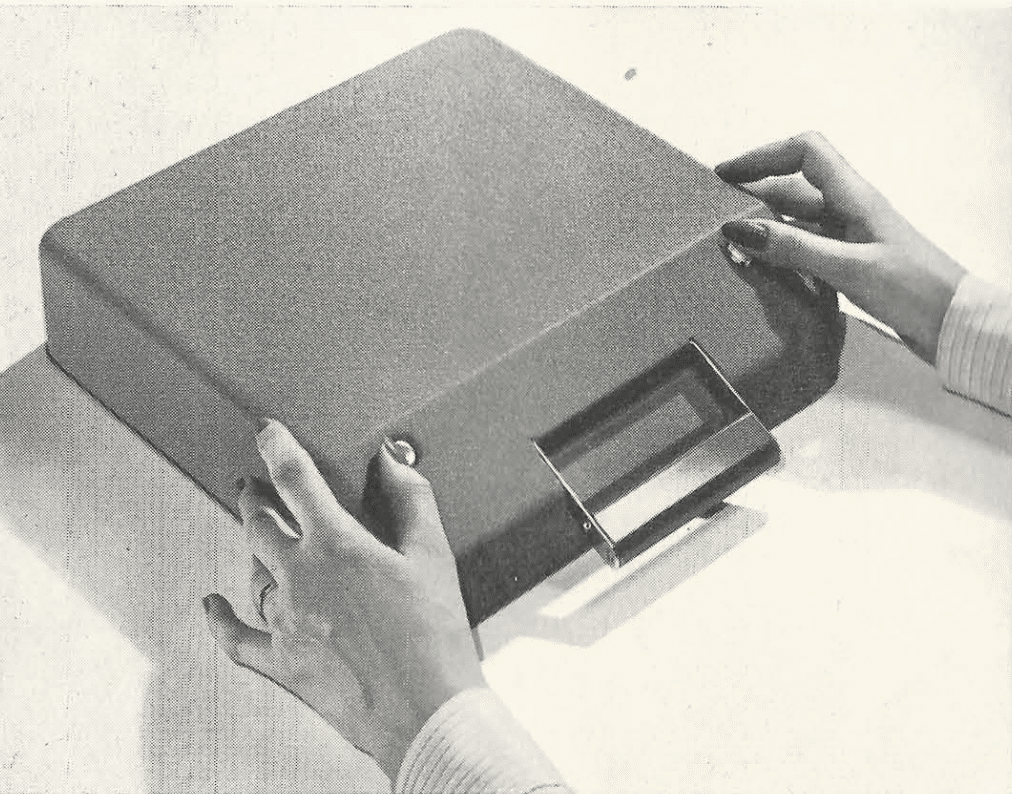
A typewriter lives a long time when it is respected day to day. The single most important habit is to keep it clean: after use, cover it with its original case or a simple cloth, to protect it from the dust that works its way into the mechanism. If you are erasing on the page you are typing, swing the carriage to one side so that the debris does not fall inside.
Leaving the machine uncovered near a window, a radiator, or in a damp room.
02
Cleaning the type
Over time, ribbon ink builds up in the raised type on the typebars. The result: blurred letters with poor contrast on the page. To clean them, use a stiff-bristled brush, or even a matchstick sharpened to a point to lift the residue. A soft cloth and a little methylated spirit finish the job. For badly clogged machines, specialist products are still available (Korès paste or ampoules).
Any metal tool, which would scratch the type and ruin the quality of the impression.


03
Cleaning the platen
The rubber platen (the cylinder the paper rests against) deserves particular attention. Over time it hardens and loses its grip. To keep it in shape: a soft, slightly damp cloth, a little soap if needed, or a touch of methylated spirit for stubborn marks. Turn the platen slowly so the whole surface is cleaned evenly.
Abrasive products and any metal object, which would damage the rubber beyond repair.
04
Dusting the mechanism
Dust is a typewriter's number one enemy. It gathers everywhere and eventually clogs the mechanism, making the touch less smooth. To get rid of it: a can of compressed air or a hand blower, watching the pressure — too strong and it can dislodge or shift fragile parts. For delicate areas, a fine, long-bristled brush (a make-up or artist's brush) works wonders.
Brushes that shed, as the bristles end up trapped in the mechanism.


05
Oiling
Contrary to what you might think, oiling a typewriter should stay exceptional. Most vintage models are designed to run dry. Oil is only called for when there is real stiffness in the typebars or the carriage bearings. In that case, a single drop of light oil such as WD-40 on a soft cloth is enough. Wipe off any excess thoroughly.
Oiling “just in case” — oil attracts dust and ends up forming a paste that jams the mechanism. Better not to oil at all than to over-oil.